


Patna, For the residents of Dema panchayat in Bihar’s Sitamarhi district, the Bagmati river is not merely a geographical feature; it is a daily barrier that dictates the rhythm of life and, too often, the timing of death.
Fifty years after a metalled road linking the village to the outside world was washed away by river erosion, the state and central governments have yet to replace it with a permanent bridge. The site requires no fresh land acquisition—the right of way still belongs to the Public Works Department—yet successive administrations have failed to act, despite budgetary allocations and repeated political assurances.
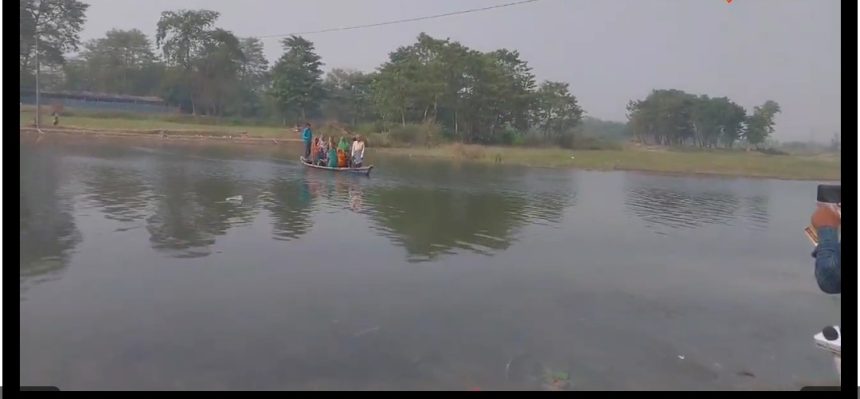
Travelling by country boat has become the only means of crossing the old channel of the Bagmati. Villagers report that medical emergencies frequently end in tragedy: pregnant women have delivered on boats, patients have died en route to hospital, and drowning during the monsoon is commonplace. During the flood season, even the rudimentary wooden “chachri” footbridges that are occasionally erected are swept away within weeks.
In 2023 the matter was raised in Parliament, briefly rekindling hope. A board bearing the name of the local MP was duly planted at the site—an act residents describe as little more than symbolic theatre. Two years later, no tender has been floated and no construction has begun.
Local sources confirm that funds for the project were sanctioned in the 2020-21 state budget and subsequently reiterated in central schemes. Officials, however, cite the familiar litany of bureaucratic delays: file movement, inter-departmental coordination, and periodic re-validation of estimates. Critics point out that the absence of any private land to acquire removes the most common excuse for prolonged inaction.
The economic cost is considerable. A two-kilometre journey currently requires a seven-kilometre detour, isolating several blocks—Riga, Dumra, Belsand, and parts of neighbouring Sheohar district—from direct connectivity. Schools, primary health centres, and markets remain effectively cut off for much of the year, perpetuating a cycle of poverty in an area already classified as aspirational by NITI Aayog.
For the roughly one thousand residents of the Dalit tola on the far bank of Mushahari village, the river is a social as well as physical divide. “We live on the same revenue map,” one inhabitant told Local18, “but the river has split us into two worlds.”
With assembly elections due in less than a year and the opposition Rashtriya Janata Dal already highlighting infrastructure neglect in the region, the unbuilt bridge over the Bagmati is rapidly turning from a local grievance into a potent political symbol. For the people of Dema, however, symbolism offers little comfort. After half a century of waiting, they say, they no longer need another promise—they need concrete, steel, and a government willing to deliver.