


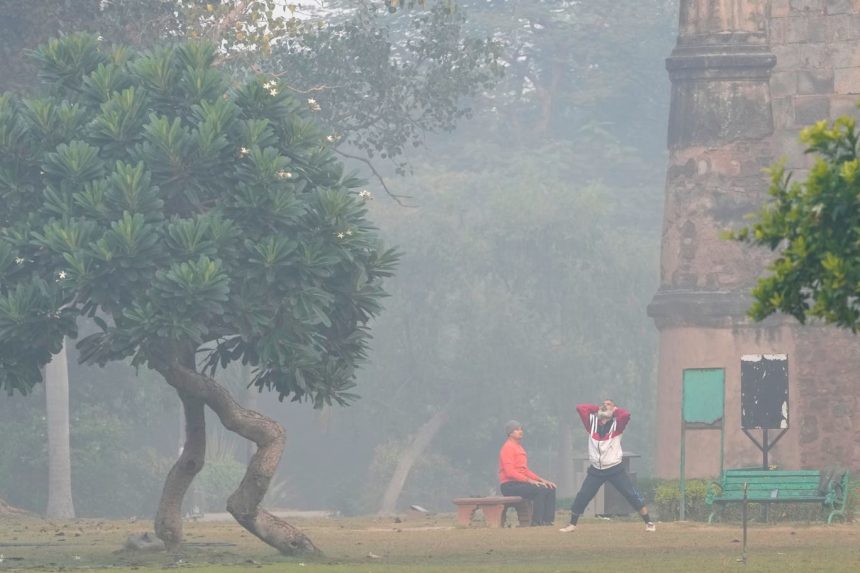
Mumbai chokes on air that the World Health Organization ranks among the planet’s most lethal. Delhi’s children inhale the equivalent of forty cigarettes a day before they reach school—if the school is open and the roads are passable. Bengaluru, the glittering poster-child of Indian aspiration, now routinely records PM2.5 levels that would trigger public-health emergencies in any country that pretended to care. The Yamuna is a ribbon of industrial sewage and human faeces; the Ganga, despite a billion-dollar cleansing pageant, remains a toxic joke. Across the land, food is laced with pesticides, heavy metals, and counterfeit spices sold by a supply chain that regulators long ago abandoned to its own profitable chaos.
And yet, with the grim predictability of a monsoon flood, the government and its cheerleaders in consulting firms and investment banks announce—breathlessly—that India is now the world’s fourth-largest economy, soon to be third. The GDP ticker climbs, the Sensex soars, the PowerPoint decks glow with compound-annual miracles. Congratulations are in order, apparently.
To what, exactly?
To a statistical triumph built on the slow suffocation of 1.4 billion people? To a growth story whose most visible by-products are unbreathable air, undrinkable water, and cities so congested that an ambulance can take four hours to travel eight kilometres—assuming the patient is still alive when it arrives? To an economic miracle that has delivered luxury malls and private jets for a microscopic elite while the median Indian still earns less than ₹15,000 a month in purchasing power that evaporates against medical bills, school fees, and the daily bribe required to get anything done?
This is not development; it is demographic arbitrage dressed up as destiny. Hundreds of millions of young, desperate people willing to work for wages that would embarrass a Bangladeshi garment factory are force-fed into urban crucibles where infrastructure collapsed sometime around the Nehruvian era and was never replaced. The result is not productivity; it is extraction. Foreign investors and domestic oligarchs grow fabulously rich by mining the last usable decades of a subcontinent’s human and ecological capital, while the state contents itself with press releases about “ease of doing business” rankings that measure how effortlessly you can bulldoze a slum to make room for another glass tower.
Walk—if you still can—through any Indian city. The pavement, where it exists, is occupied by parked cars, roadside temples, and police barricades. The pedestrian is an afterthought, a pest to be honked at and occasionally run over. Public transport is a daily war crime. Roads are not engineered; they are negotiated, inch by blood-soaked inch. The noise alone—110 decibels of horns that serve no purpose except to externalise the driver’s existential anguish—shaves years off life expectancy. And all of this is celebrated as the inevitable price of “becoming a developed nation by 2047,” as if asphyxiation were merely a transitional phase.
The cruelty of the boast is almost artistic. We are told to take pride in aggregate GDP while per-capita income languishes behind countries we once pitied. We are invited to celebrate “unicorn” start-ups whose founders send their own children to school in Singapore or London because no Indian city is fit for them either. We are asked to swallow the fiction that stock-market capitalisation is synonymous with national strength while state governments plead bankruptcy and public hospitals run out of oxygen—again.
There is a word for an economy that grows richer while its citizens grow sicker, its air more poisonous, its rivers more lethal, its streets more impassable. That word is not “emerging.” It is “failing.”
History will not judge India by the size of its GDP in 2025. It will judge it by the fact that, at the precise moment the country overtook Britain and Japan to claim fourth place, its capital city had to shut schools because the air was literally unbreathable and its financial capital had to ration water because the lakes were either dry or toxic. It will remember that we chose page-one advertisements proclaiming “India’s Century” over the far cheaper and more dignified act of giving people clean air, safe food, and a footpath to walk on.
The fourth-largest economy in the world, ladies and gentlemen—and a child in Muzaffarpur dies of encephalitis because the public health system exists only on paper. The fourth-largest economy in the world—and farmers drink pesticide because the markets we so proudly liberalised left them indebted and hopeless. The fourth-largest economy in the world—and the average citizen cannot cross the street without risking life and limb.
If this is victory, one dreads to imagine defeat.
Until India’s leaders can provide the elementary decencies that even modestly successful nations take for granted—breathable air, drinkable water, walkable cities, food that does not poison you—the rest is just accountancy. Cruel, glittering, murderous accountancy.
And no amount of GDP growth will launder the stench of a nation that grew rich by letting its people choke.