


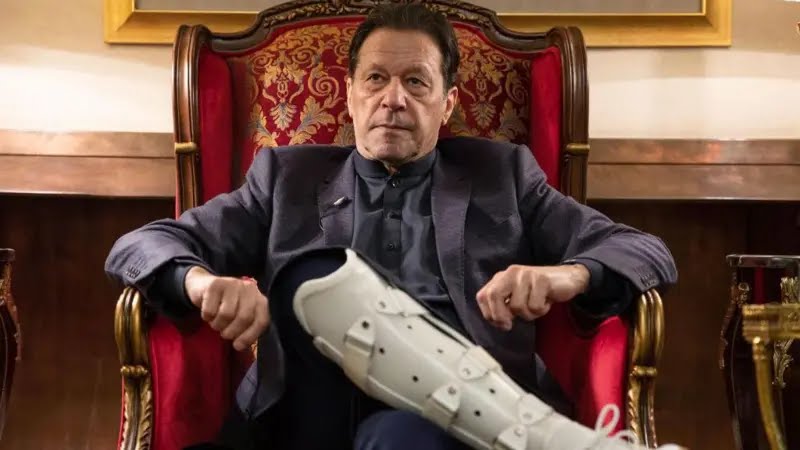
As rumours swirl over the health and whereabouts of Pakistan’s imprisoned former prime minister Imran Khan, the 73-year-old cricketer-turned-politician once again finds himself at the centre of intense public and political scrutiny. Jailed since August 2023 in Rawalpindi’s Adiala prison on corruption charges involving an alleged £190mn state-gift scandal, Mr Khan’s family has raised alarm over restricted access, prompting his son Qasim to demand “proof of life”.
While the prison authorities insist the Pakistan Tehreek-e-Insaf (PTI) founder is in good health, the episode has reignited interest in a political career that has rarely been far from controversy. Below are five episodes that have most sharply divided opinion.
1. Marriage to Jemima Goldsmith (1995–2004)
At 43, the newly retired World Cup-winning captain married 21-year-old British heiress Jemima Goldsmith in a union that captivated and polarised Pakistan. The age gap, her Jewish heritage, and her conversion to Islam fuelled endless tabloid and political debate. The couple divorced in 2004; a decade later, Mr Khan’s brief second marriage to journalist Reham Khan ended acrimoniously, with Ms Reham later publishing allegations of impropriety against both the PTI leader and his party.
2. Third Marriage to Bushra Bibi and the Iddat Controversy (2018)
Mr Khan’s 2018 marriage to Bushra Bibi, a faith healer from a prominent Punjabi landowning family, triggered a legal and religious storm. Ms Bibi’s former husband alleged the couple had violated Islamic law by not observing the mandatory waiting period (iddat) after her divorce. Though initially sentenced to seven years, both were acquitted on appeal. Critics within conservative circles continue to cite the episode as evidence of selective adherence to the religious principles Mr Khan often champions.
3. The “Taliban Khan” Tag and Sympathy for Militants
Throughout his premiership (2018–2022), Mr Khan walked a delicate line between liberal posturing and appealing to Pakistan’s powerful religious right. The balancing act faltered in 2020 when, in a parliamentary speech, he referred to Osama bin Laden as a “shaheed” (martyr), prompting outrage in Washington and among domestic opponents who dubbed him “Taliban Khan”. His government’s perceived softness towards the Pakistani Taliban (TTP) and efforts to rehabilitate banned militant outfits further entrenched the label.
4. Remarks Linking Women’s Clothing to Sexual Violence (2021)
In a widely criticised HBO Axios interview, Mr Khan suggested that women wearing “very few clothes” would have an “impact on men” unless they were “robots”, appearing to partly blame victims for rising rape cases. Months earlier, he had attributed sexual violence to increasing “fahashi” (obscenity) in society and defended the Islamic concept of purdah as a safeguard against temptation. Human-rights groups and women’s activists condemned the remarks as victim-blaming and regressive; the episode severely damaged his international reputation on gender issues.
5. Denial of Jesus Christ’s Historical Existence (2018)
During a public address shortly after taking office, Mr Khan asserted that, unlike other prophets, “there is no mention of Jesus in history”. The comment provoked an immediate backlash from Pakistan’s Christian minority and sparked heated debate on social media, with critics accusing the new prime minister of historical ignorance and insensitivity towards religious minorities.
From Oxford-educated playboy-cricketer to populist prime minister toppled by a parliamentary no-confidence vote in April 2022, Mr Khan’s trajectory has been anything but conventional. Now, as his supporters mobilise anew amid fresh uncertainty over his condition in Adiala jail, the former premier’s legacy remains as polarising as ever, a potent mix of charisma, contradiction, and enduring controversy.