



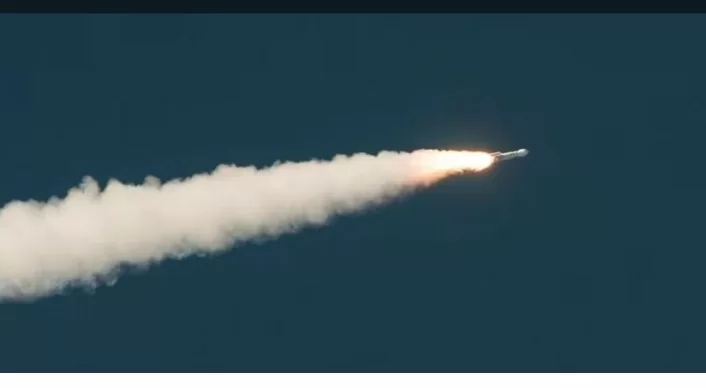
Los Angeles, CA — In a grand celestial spectacle, a NASA space capsule, bearing a precious cargo of rocky material harvested from the surface of an asteroid three years ago, is hurtling toward Earth. This weekend, it is destined for a dramatic fiery plunge through the atmosphere, culminating in a parachute landing in the Utah desert on Sunday.
Meteorological forecasts are highly favorable, and the autonomous spacecraft OSIRIS-REx is precisely aligned for the release of the sample-return capsule for its final descent. NASA officials, during a comprehensive news briefing on Friday, assured that no further course adjustments are required.
Sandra Freund, the program manager at Lockheed Martin, which masterminded and constructed the spacecraft, expressed her anticipation of an impeccable touchdown at the extensive Utah Test and Training range, situated to the west of Salt Lake City.
The spherical capsule, resembling a gumdrop in shape, is scheduled for a parachute-aided touchdown at precisely 10:55 a.m., just about 13 minutes after its dramatic entry into the Earth’s upper atmosphere at a staggering speed of approximately 35 times the speed of sound. This grand finale culminates a remarkable seven-year odyssey.
Should this mission triumph, the OSIRIS-REx undertaking, a collaborative venture between NASA and researchers at the University of Arizona, would signify the third asteroid sample, and notably, the largest ever returned to Earth for meticulous analysis. This achievement follows two analogous missions carried out by Japan’s space agency over the past 13 years.
The invaluable specimen collected by OSIRIS-REx was extracted from Bennu, a carbon-rich asteroid initially discovered in 1999 and categorized as a “near-Earth object” due to its periodic close encounters with our planet every six years.
Bennu, though modest in size compared to its cosmic brethren, measures merely 1,600 feet in diameter. Nonetheless, it harbors critical clues pertaining to the origins and evolution of terrestrial planets, including our own cherished Earth.
The voyage of OSIRIS-REx commenced in September 2016, culminating in its rendezvous with Bennu in 2018. Subsequently, it dedicated nearly two years to orbiting the asteroid before executing a daring maneuver on October 20, 2020. During this maneuver, it extended its robotic arm to collect a precious bounty of samples from Bennu’s surface.
Following this, the spacecraft embarked on an awe-inspiring cruise spanning a staggering 1.2 billion miles back to our home planet, initiating its return journey in May 2021.
The estimated mass of the Bennu sample aboard the spacecraft is an impressive 250 grams, surpassing by far the quantities of material retrieved from asteroid Ryugu in 2020 and asteroid Itokawa in 2010.
Upon its return, the newfound celestial treasure will be carefully transported by helicopter to a meticulously sanitized “clean room” established at the Utah test range.
By Reuters