



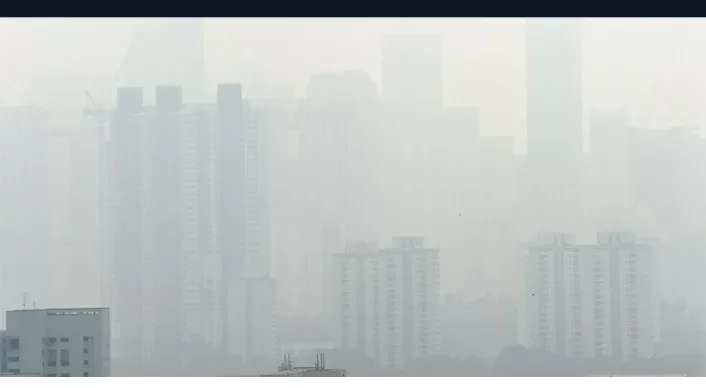
As Winter Descends, Toxins Blanket the Region.
In a recurring environmental challenge, South Asia faces severe air pollution levels that are disrupting the daily lives of millions, prompting school closures, affecting sports events, and compelling governments to issue advisories for residents to stay indoors to mitigate health risks.
The annual surge in air pollution is a particularly acute issue for South Asian nations as the onset of winter brings about stagnant, heavy air that traps pollutants in a dense smog layer.
South Asia has emerged as a global epicenter for air pollution, with studies revealing that four of the world’s most polluted countries and nine of the 10 most polluted cities are situated in the region.
Understanding the Intensification of Pollution in South Asia:
The rapid industrialization, economic growth, and population expansion witnessed by South Asian countries over the past two decades have fueled heightened demand for energy and fossil fuels.
While common sources like industries and vehicles contribute to pollution in most regions, South Asia grapples with distinctive challenges such as solid fuel combustion for cooking and heating, human cremation practices, and the burning of agricultural waste.
A notable example is the stubble burning in neighboring states of Punjab and Haryana, accounting for approximately 38% of the pollution in New Delhi this year.
Unprecedented Rise in Vehicle Numbers:
The surge in the number of vehicles on South Asian roads, a consequence of the region’s development, has exacerbated the pollution predicament.
For instance, India and Pakistan have witnessed a four-fold increase in the number of vehicles since the early 2000s.
New Delhi, consistently ranked the world’s most polluted capital by Swiss Group IQAir for four consecutive years, boasts 472 vehicles per thousand population, with almost eight million vehicles navigating its roads as of 2022.
Challenges in Pollution Mitigation Efforts:
Despite concerted efforts to curb pollution, including the formulation of air quality management plans, increased deployment of pollution monitors, and advocacy for cleaner fuels, tangible results remain elusive.
One of the key impediments is the lack of coordinated pollution control initiatives among South Asian countries.
Airborne dust particles, with the ability to traverse hundreds of kilometers, defy national borders, impacting countries beyond their origin.
Around 30% of the pollution in major Bangladeshi cities originates in India, carried by prevailing winds from northwest to southeast.
Prospects for a Solution:
Addressing the escalating pollution crisis necessitates collaborative efforts among South Asian countries, focusing on improved monitoring and the formulation of effective policies.
Coordinated regional endeavors should be complemented by tailored strategies to address local conditions.
Moreover, sectors that have received limited attention, including agriculture and waste management, should be brought under the spotlight.
For instance, offering subsidies on advanced harvesting machines could be instrumental in curbing stubble burning, provided governments take proactive measures to facilitate their acquisition.