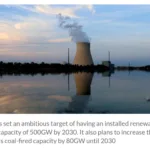



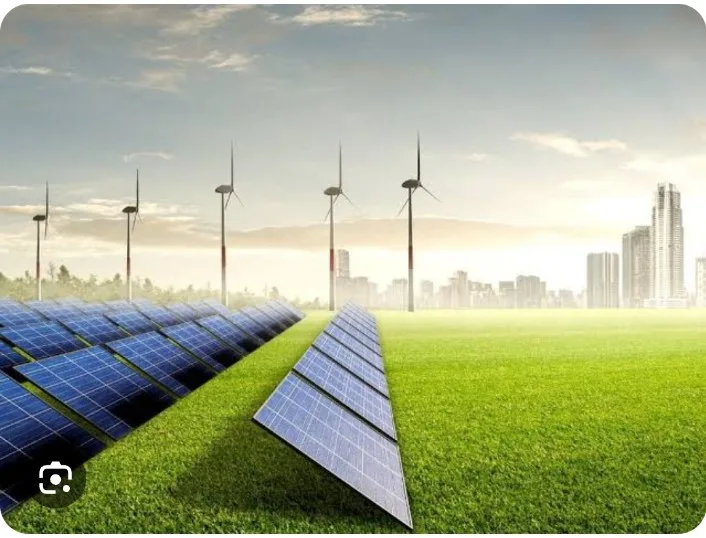
Mumbai, In the midst of India’s energy transition, a nuanced narrative unfolds, shedding light on the potential economic disparities that could accompany this significant shift. The nation, under the leadership of Prime Minister Narendra Modi, has set ambitious targets to generate 500 gigawatts from renewable sources by 2030, marking a substantial leap from the current 133 gigawatts.
However, the intricate dance between renewable energy and the persistent use of coal complicates the trajectory. A recent study by NITI Aayog, a government think-tank, suggests that the demand for coal will remain steadfast until 2035-2040, offering a lifeline to an industry deeply ingrained in India’s energy matrix. Consequently, the commitment to achieving net-zero emissions by 2070 reflects a delicate balance between environmental aspirations and economic pragmatism.
One of the looming challenges arises from the geographical distribution of resources. The mineral-rich regions, primarily situated in the eastern and central states, coincide with some of the poorest areas in the country. Take Jharkhand, for instance, the largest coal-producing state contributing to 28% of proven reserves. Despite its significant coal wealth, the state grapples with grinding poverty, with 28% of its population classified as living in extreme poverty.
This incongruity extends to the renewable energy landscape. The prosperous southern and western states, basking in ample sunshine and wind, lead the charge in harnessing wind-and-solar potential. In contrast, states like Jharkhand, despite being coal-rich, contribute a mere 1.7% to India’s total wind-and-solar potential.
As coal’s significance wanes, states heavily reliant on this fossil fuel face an impending economic quagmire. Jharkhand, emblematic of this struggle, is already contemplating a proactive approach. In 2022, the state established a task force to plan for a “just transition,” acknowledging the need to diversify its energy sources. The task force aims to formulate policies that capitalize on Jharkhand’s solar potential, potentially repurposing disused coalfields, and incentivizing green industries like hydrogen production.
The broader concern transcends individual states and delves into the intricacies of India’s federal structure. Richer states traditionally assist their economically weaker counterparts through central government contributions. If states heavily dependent on coal witness economic downturns, it could translate into richer states shouldering a more substantial financial burden.
A working paper by Rohit Chandra and Sanjay Mitra for the National Institute of Public Finance and Policy underscores the potential fiscal deficits looming over coal-dependent states. The current lack of interest from central government ministries in addressing and mitigating these economic consequences adds a layer of complexity to the unfolding narrative.
The evolving energy landscape in India demands a holistic approach that navigates the fine line between environmental sustainability and economic stability. Striking this balance is not only crucial for individual states but also pivotal for the overall economic health of the nation. As the energy transition unfolds, the need for proactive policies and federal cooperation becomes increasingly evident.